

Product Overview
Ethylene Carbonate (EC, C₃H₄O₃) is a cyclic organic carbonate that serves as the primary solvent in lithium-ion battery electrolytes, enabling the formation of the critical solid electrolyte interphase (SEI) layer on graphite anodes. EC’s high dielectric constant (89.8) and ability to dissolve lithium salts (LiPF₆) at high concentrations make it irreplaceable in conventional Li-ion electrolyte formulations. Dongkwang Poland supplies battery-grade EC (≥99.95% purity) from specialised organic chemical producers for the European battery industry.
How Ethylene Carbonate (EC) Works
In Li-ion cells, EC decomposes reductively on the graphite anode surface during the first charge cycle, forming a lithium carbonate and organic polymer-rich SEI layer. This SEI layer is electronically insulating but ionically conducting, allowing Li⁺ transport while preventing continuous electrolyte decomposition. Without EC-derived SEI, graphite anodes suffer continuous electrolyte consumption, capacity fade, and potential exfoliation. EC is typically mixed with linear carbonates (DMC, EMC, DEC) to lower viscosity while maintaining SEI quality.
Key Benefits
Application Guide
Li-ion electrolyte formulation: typically 20-40 vol% of binary/ternary solvent systems (EC:DMC, EC:EMC:DMC). Mixed with LiPF₆ at 1.0-1.2 M concentration. Polymer synthesis: monomer for polycarbonate and polyurethane production. Organic solvent: high-polarity solvent for specialty chemical reactions. Textile auxiliary: used in fabric finishing. Pharmaceutical: intermediate in API synthesis.
Ideal For
Storage & Handling
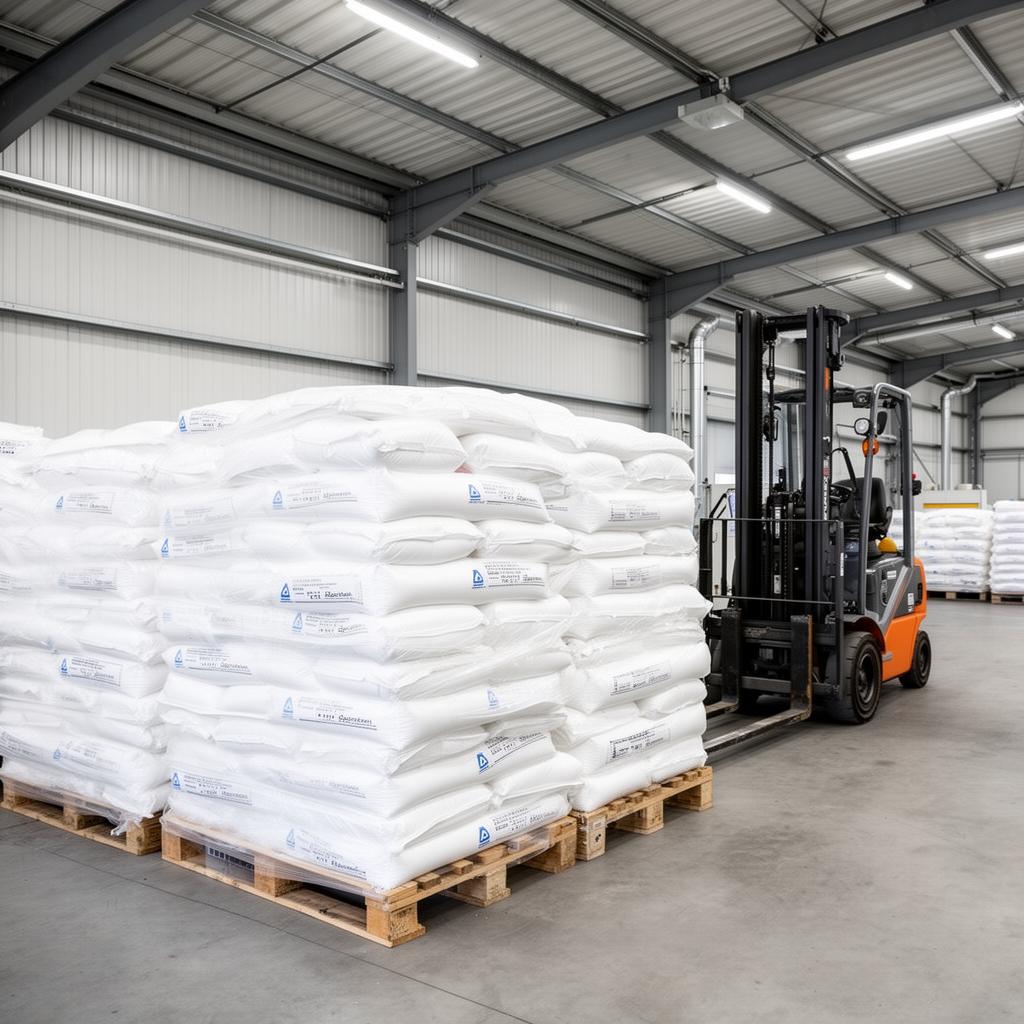
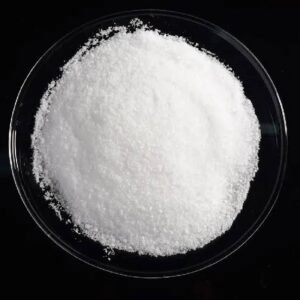
Store in dry conditions at 15-30°C. EC has a melting point of 36°C — supplied as solid flakes or liquid (above mp). Non-hazardous for transport. Low toxicity. Keep sealed to prevent moisture absorption which degrades purity. Battery-grade requires contamination-free handling. Shelf life: 24 months in sealed containers.
Reviews
There are no reviews yet.