
Product Overview
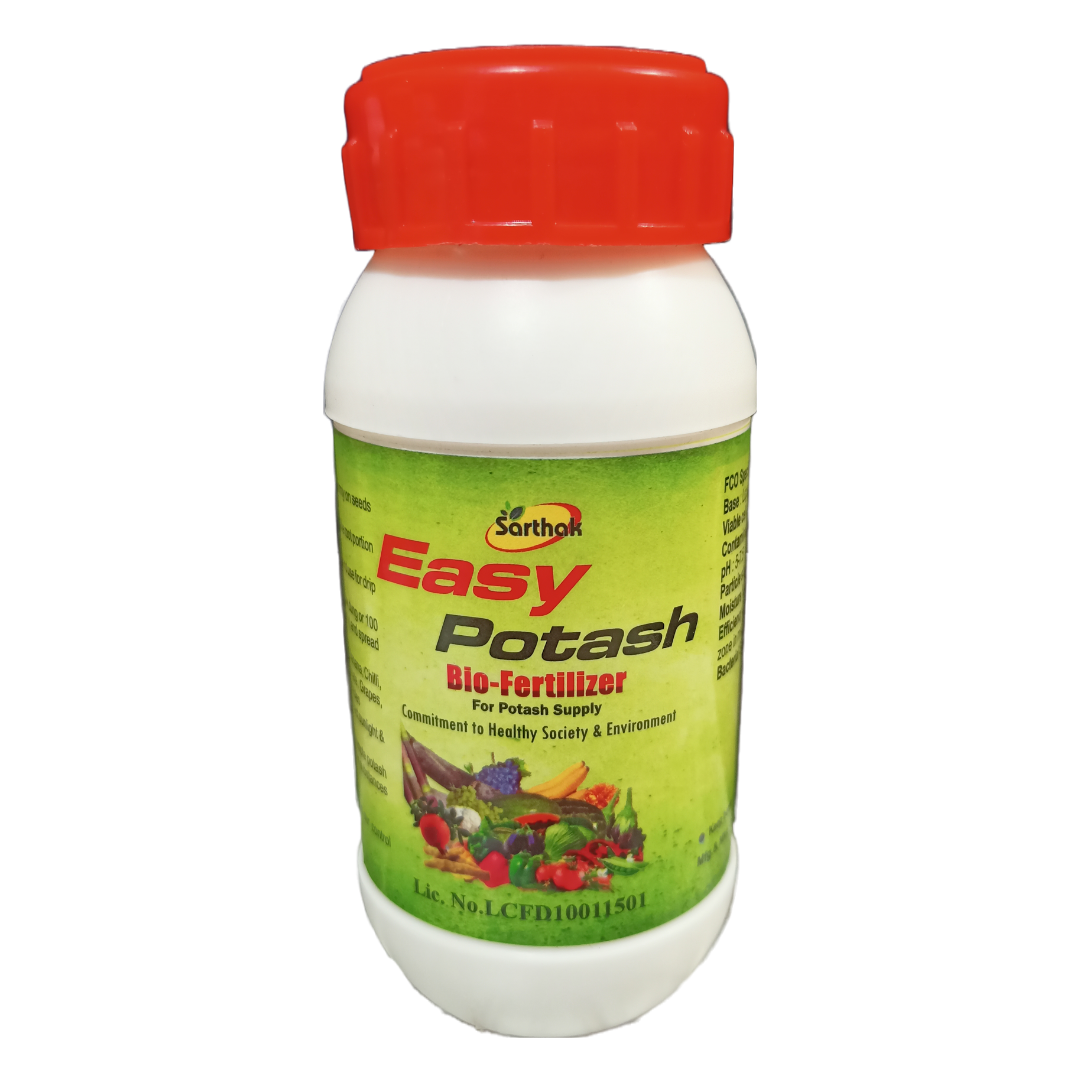
Frateuria aurantia Potassium-Mobilizing Bacteria (KMB) biofertilizer solubilizes potassium from soil mineral reserves — feldspar, mica, illite, and other K-bearing minerals that contain enormous potassium reserves inaccessible to crops. While soils may contain 20,000-30,000 kg K/ha in total, only 1-2% is plant-available at any time. F. aurantia produces organic acids that dissolve these mineral reserves, increasing plant-available K by 20-30% and reducing Muriate of Potash (MOP) or Sulphate of Potash (SOP) requirements. Particularly valuable in K-deficient soils of Sub-Saharan Africa and Southeast Asia.
How Potassium-Mobilizing Bacteria (Frateuria aurantia) Works
Frateuria aurantia produces organic acids (oxalic, citric, tartaric) and capsular polysaccharides that weather potassium-bearing minerals. The organic acids provide hydrogen ions that displace K⁺ from mineral lattice structures, while chelating aluminum and silicon to prevent re-fixation. The released K⁺ enters the soil solution and becomes plant-available. F. aurantia also produces plant growth regulators (IAA) and solubilizes minor amounts of phosphorus, providing additional growth benefits beyond K mobilization.
Key Benefits
Application Guide
Seed treatment: 10 mL liquid per kg seed. Soil application: 2-5 L/ha through drip or in-furrow. Seedling dip: 100 mL per 10L water. Apply to K-deficient soils (exchangeable K <150 kg/ha) for maximum benefit. Best results when soil contains K-bearing minerals (most soils do). Can be combined with reduced-rate MOP/SOP for immediate + biological K supply. Apply at planting for early root colonization.
Ideal For
Storage & Handling
Store at ambient temperature (<25°C). Liquid formulation. Shake before use. Shelf life: 12 months. Protect from direct sunlight and freezing.
Reviews
There are no reviews yet.