Understanding the difference between humic acid and fulvic acid is essential for anyone looking to improve soil structure, boost nutrient uptake, and increase yields.
What Are Humic Substances?
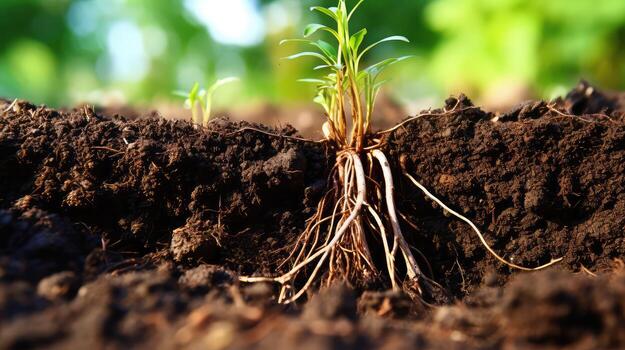
Humic substances are naturally occurring organic compounds found in soil, peat, and lignite. They form through the decomposition of plant and animal matter over thousands of years. These substances are the backbone of healthy, fertile soil and are broadly classified into three groups: humin, humic acid, and fulvic acid.
Humic Acid: The Soil Builder
Humic acid is a large, complex molecule that works primarily in the soil. Its key benefits include:
– Improves soil structure — Humic acid binds soil particles into aggregates, improving aeration and water retention.• Increases cation exchange capacity (CEC) — This means soil can hold more nutrients and release them slowly to plant roots.• Stimulates microbial activity — Beneficial soil microorganisms thrive in humic-rich soils.• Chelates micronutrients — Makes iron, zinc, manganese, and copper more available to plants.
Humic acid is best applied as a soil amendment, mixed into the root zone or applied via drip irrigation. It is particularly effective in sandy or degraded soils where organic matter is low.
Fulvic Acid: The Plant Activator
Fulvic acid is a smaller, lighter molecule that can penetrate plant cell membranes directly. This makes it uniquely effective as a foliar spray. Key benefits include:
– Enhanced nutrient absorption — Fulvic acid acts as a natural chelator, carrying nutrients directly into plant cells.• Faster results — Because it enters the plant quickly, effects are visible within days.• Stress tolerance — Plants treated with fulvic acid show improved resistance to drought, heat, and salinity.• Compatible with most fertilizers — Can be tank-mixed with NPK, micronutrients, and pesticides.
Fulvic acid is ideal for foliar application, fertigation, and seed treatment.
Head-to-Head Comparison
| Property | Humic Acid | Fulvic Acid |
| Molecular size | Large | Small |
| Color | Dark brown/black | Yellow/amber |
| Primary action | Soil conditioning | Plant nutrition |
| Application method | Soil drench, drip | Foliar spray, fertigation |
| Speed of effect | Gradual (weeks) | Rapid (days) |
| pH range | Works best at pH 6-7 | Effective at any pH |
| Nutrient chelation | Moderate | Strong |
When to Use Each
Use humic acid when:• You need to rebuild degraded soil• Improving long-term soil fertility• Growing in sandy or clay-heavy soils• Starting a new field or plantation
Use fulvic acid when:• You need quick nutrient correction• Applying foliar fertilizers• Plants show nutrient deficiency symptoms• Growing in hydroponic or soilless systems
Use both together for maximum results. A soil application of humic acid combined with foliar fulvic acid sprays creates a synergistic effect that improves both soil health and plant vigor.
Bo Fertilizer Bio-Enhanced Solutions
At Bo fertilizer Poland, we offer premium humic and fulvic acid products sourced from high-quality leonardite deposits:
– Humic Liquid Concentrate — 12% humic acid for soil application via drip or broadcast• Humic Acid Salts (Powder) — 65% humic acid content for dry application or dissolution
Both products are available in bulk quantities for commercial agriculture operations worldwide, with shipping to Africa, Asia, South America, and Europe.
